A Deadly Pakistan Train Blast Shakes Balochistan Again
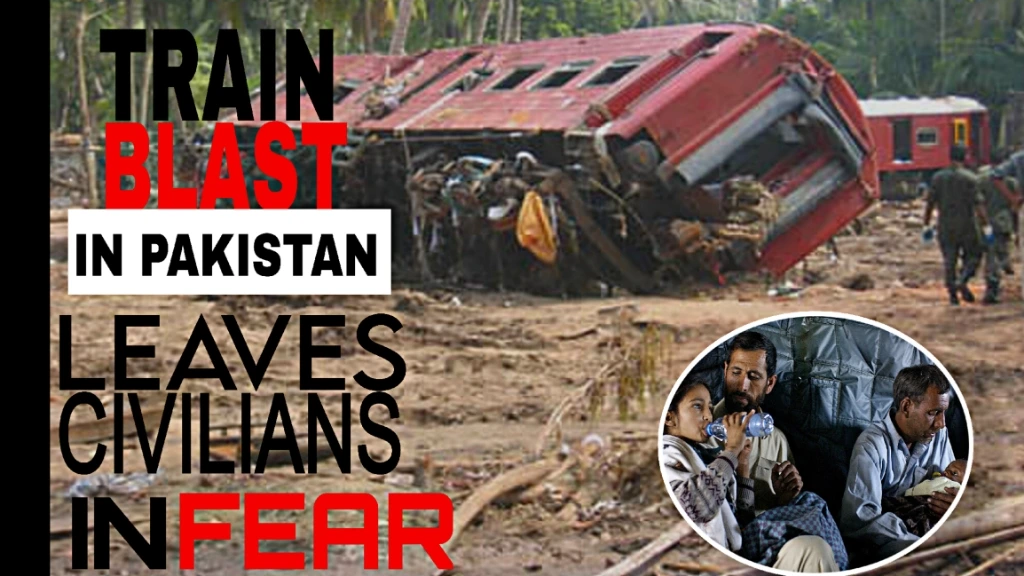
Fear returned to Pakistan’s railway system after a devastating explosion targeted a train in Balochistan. The latest Pakistan Train Blast has once again exposed the fragile security situation in the country’s most unstable province. The explosion happened near Quetta in southwestern Pakistan. According to multiple reports, at least 24 people were killed while more than 70 others were injured. Several train coaches derailed after the blast. In addition, nearby vehicles and buildings were also damaged.
The attack immediately raised concerns about civilian safety, militant expansion, and the future stability of Balochistan. Furthermore, it highlighted how public transport systems are increasingly becoming targets in Pakistan’s long-running insurgency conflict.
According to DD News, the deadly explosion targeted a passenger train in Pakistan’s Balochistan province. The attack was reportedly claimed by separatist militants linked to the Baloch Liberation Army (BLA), a group involved in the long-running insurgency in the region.
What Happened During the Pakistan Train Blast?
The attack reportedly occurred near the Chaman Phatak railway crossing in Quetta. Authorities stated that an explosives-laden vehicle struck the train while it was moving through the area. As a result, two coaches overturned and caught fire. Thick smoke covered the railway line within minutes. The train was reportedly carrying security personnel along with their families ahead of the Eid holidays. However, ordinary civilians were also among the passengers. Rescue teams later confirmed that women and children were among the victims and injured passengers.
The Baloch Liberation Army claimed responsibility for the attack. The group described the bombing as an operation targeting security forces. Pakistani officials strongly condemned the incident and called it an act of terrorism. Meanwhile, hospitals in Quetta declared emergency conditions as dozens of injured people were rushed for treatment. Several victims reportedly remained in critical condition hours after the explosion.
Why Balochistan Remains a Conflict Zone
Balochistan has remained one of Pakistan’s most troubled regions for decades. Although the province is rich in natural gas, minerals, and strategic trade routes, many local communities believe they have not benefited from those resources. Separatist groups frequently accuse the Pakistani government of exploiting the province while ignoring local economic development. As a result, resentment has continued to grow across several districts.
In addition, Balochistan shares borders with both Afghanistan and Iran. Therefore, the region carries major geopolitical importance. It also hosts projects connected to the China–Pakistan Economic Corridor (CPEC), including the strategic Gwadar Port. Because of this, militant groups increasingly target infrastructure, railway lines, and security convoys. Analysts believe these attacks are designed to weaken state authority and disrupt major economic projects.
The Rising Threat of Militancy in Pakistan
The recent Pakistan Train Blast is not an isolated event. Instead, it reflects a broader rise in militant violence across Pakistan during recent years. Last year, militants linked to the BLA hijacked the Jaffar Express and took passengers hostage during a major security crisis. Since then, attacks on railways, military installations, and public infrastructure have intensified.
Security experts believe militant organizations are changing their strategy. Earlier attacks mainly focused on remote military targets. However, newer operations increasingly affect civilians and transportation systems.
This shift creates psychological pressure on the population. It also damages public confidence in state security institutions. Moreover, repeated attacks may discourage domestic investment and foreign economic activity in the province. Investors generally avoid regions where transport and infrastructure remain vulnerable to violence.
Security Failures Raise Difficult Questions
The bombing has also triggered serious debate about intelligence and security preparedness. Many observers are asking how an explosives-filled vehicle managed to approach a moving train carrying security personnel. Others are questioning whether intelligence agencies failed to detect planning activity before the attack.
Pakistan has conducted multiple counterterrorism operations in Balochistan during recent years. Nevertheless, attacks continue to occur with alarming frequency. Critics argue that military responses alone may not solve the deeper political and economic issues fueling unrest. Without local trust and regional stability, security operations may only offer temporary results.
Geopolitical Implications Beyond Pakistan
The Pakistan Train Blast also carries international implications. Balochistan’s location makes it strategically important for South Asia, Central Asia, and the Middle East. The province connects important trade routes and energy corridors. Therefore, instability there affects broader regional calculations. In particular, attacks linked to separatist groups create concerns for Chinese investments connected to CPEC projects. China has invested heavily in infrastructure across Pakistan, especially around Gwadar Port.
At the same time, Pakistani officials have repeatedly alleged foreign involvement in destabilizing Balochistan. However, such claims remain disputed internationally. Even so, continued violence could increase diplomatic tensions and deepen regional mistrust. Security concerns may also affect trade connectivity projects planned across South and Central Asia.
The Human Cost Behind the Headlines
Beyond geopolitics and security debates, ordinary citizens continue paying the highest price. Families traveling for holidays suddenly became victims of one of Pakistan’s deadliest railway attacks in recent years. Survivors described scenes of panic, smoke, and destruction after the explosion.
Psychological trauma often lasts far longer than physical damage. Repeated attacks create fear among travelers and weaken public confidence in transportation systems. In many cases, children grow up in regions where violence becomes normalized. That long-term social impact is difficult to measure but deeply significant.
Can Peace Return to Balochistan?
The future of peace in Balochistan remains uncertain. Security crackdowns may reduce violence temporarily. However, many analysts believe deeper political dialogue and economic inclusion are equally necessary. Without addressing unemployment, regional inequality, and political grievances, instability may continue. Militancy often grows where frustration and isolation remain unresolved.
Pakistan now faces a difficult challenge. It must improve security while also rebuilding public trust in conflict-hit areas. The latest Pakistan Train Blast has therefore become more than a single tragic event. Instead, it represents a warning about rising militancy, unresolved grievances, and growing instability in one of South Asia’s most sensitive regions.
Conclusion
The recent Pakistan Train Blast highlights the worsening security crisis in Balochistan and the growing threat of militant violence in Pakistan. The attack killed at least 24 people and injured more than 70, including civilians, showing how public spaces are increasingly becoming targets.
The incident also exposed major security and intelligence concerns while raising fears over regional stability, CPEC-linked projects, and rising separatist activity linked to the Baloch Liberation Army (BLA). Although military operations continue, long-term peace in Balochistan may remain difficult without political dialogue, economic inclusion, and stronger public trust
By Gurmeet Kour | Geopolitical Analyst