
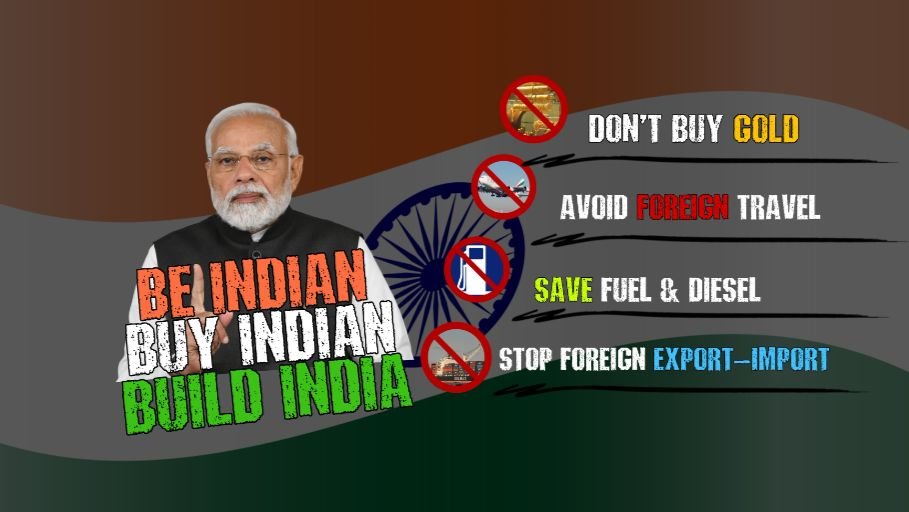
Why New Delhi Is Asking Indians to Spend More Carefully
India’s latest economic messaging has triggered debate across households, financial markets, and political circles. From discouraging unnecessary imports to urging restraint in luxury spending, the government’s tone has become noticeably cautious. For many citizens, the shift has raised an important question: why is the country suddenly emphasizing economic discipline? The answer lies in a mix of geopolitical uncertainty, currency pressure, rising import costs, and long-term strategic planning. While officials have not announced a formal austerity program, the broader India spending warning reflects growing concern over how global instability could affect the country’s economic resilience.
According to News on Air, the government’s appeal focuses on conserving foreign exchange and reducing non-essential spending amid global economic uncertainty.
Understanding the Background Behind the Economic Appeal
India’s economy has remained one of the world’s fastest-growing major economies. However, global conditions have become increasingly volatile. Conflicts in key shipping regions, energy price fluctuations, supply chain disruptions, and slowing international demand have all created pressure on developing economies. At the same time, India continues to import large volumes of crude oil, electronic goods, luxury products, and gold. These imports place significant stress on foreign exchange reserves whenever the rupee weakens or global prices rise sharply.
This is where the current India spending warning becomes strategically important. Policymakers appear concerned that excessive non-essential spending could widen the trade deficit during a period of global instability. Historically, governments across the world have encouraged public restraint during uncertain economic phases. India’s current messaging follows a similar logic: reduce unnecessary outflows now to strengthen long-term economic stability.
Why the Government Is Encouraging Reduced Spending
The government’s appeal is not simply about saving money. Instead, it reflects a broader national strategy linked to economic security and geopolitical preparedness.
Protecting Foreign Exchange Reserves
India imports the majority of its crude oil requirements. Whenever global oil prices rise, the country spends more foreign currency on energy purchases. Excessive imports of luxury goods and gold can further strain reserves. The ongoing India spending warning is therefore partly aimed at controlling avoidable demand that increases dollar outflow from the economy.
Reducing Dependency on External Markets
Global trade routes remain vulnerable to geopolitical tensions. Shipping disruptions in strategic waterways can rapidly increase transportation costs and delay supplies. By encouraging citizens to prioritize domestic consumption and avoid unnecessary imports, India hopes to reduce dependence on unstable international supply chains.
Preparing for Long-Term Economic Competition
India is increasingly positioning itself as a manufacturing and strategic power. For that transition to succeed, policymakers want stronger domestic savings, greater investment capacity, and more stable financial conditions.
In this context, the India spending warning is not only defensive—it is also developmental. Authorities appear to believe that disciplined consumption today can support infrastructure growth and industrial expansion tomorrow.
What Citizens Are Being Asked to Avoid
Although no official restrictions have been imposed, the public messaging has focused on limiting non-essential expenditure.
Luxury and Imported Goods
Officials and analysts have repeatedly highlighted the impact of high-value imports on the trade balance. Imported luxury items, premium electronics, and non-essential foreign products are increasingly viewed through an economic lens.
Excessive Gold Purchases
Gold remains deeply connected to Indian household savings culture. However, large-scale gold imports increase pressure on foreign reserves. As a result, discussions surrounding the India spending warning often mention gold buying as an area of concern.
Non-Essential Foreign Travel
Outbound tourism leads to substantial foreign currency spending. During periods of economic caution, governments sometimes encourage citizens to postpone unnecessary international travel.
High Consumer Borrowing
There is also concern about rising personal debt and credit-driven consumption. Financial experts warn that uncontrolled borrowing can weaken household resilience during uncertain economic periods.
Public Reaction Remains Mixed
The public response to the India spending warning has been divided. Some citizens support the government’s caution, arguing that economic discipline is necessary during periods of global instability. Supporters believe India must prioritize national resilience over short-term consumerism. However, critics argue that reduced spending could slow business activity and hurt sectors dependent on consumer demand. Retail industries, tourism operators, luxury brands, and small businesses may face challenges if public spending weakens significantly.
Middle-class households, meanwhile, appear conflicted. Many understand the geopolitical concerns but remain worried about inflation, job security, and the rising cost of living. Social media discussions have also reflected skepticism. Some users question whether citizens alone should bear the burden of economic adjustment, while others see the messaging as a practical response to global uncertainty.
The Geopolitical Dimension Behind the Warning
The current India spending warning cannot be separated from global geopolitics. Across the world, governments are reassessing economic vulnerabilities after years of pandemic disruption, wars, and supply chain instability. Nations are increasingly focused on self-reliance, energy security, and strategic reserves. India’s position is particularly sensitive because of its dependence on imported energy and its ambitions to become a major global manufacturing hub.
Rising Energy Risks
Conflicts affecting oil-producing regions or critical shipping lanes could sharply increase fuel prices. Higher energy costs would affect transportation, manufacturing, and inflation across India.
Global Economic Fragmentation
Major economies are gradually moving toward competing economic blocs. Trade restrictions, sanctions, and strategic tariffs have become more common. Under such conditions, governments often encourage stronger domestic financial discipline. The India spending warning reflects concerns that external shocks could arrive with little warning.
Strategic Economic Nationalism
India has already promoted initiatives such as “Make in India” and production-linked incentive schemes. Encouraging restrained consumption of imported goods aligns with this broader push for economic self-reliance.
Possible Global Consequences
India’s economic choices matter internationally because of the country’s size and market influence. If Indian consumers reduce spending significantly, global luxury brands, tourism sectors, and exporters may feel the impact. Countries heavily dependent on Indian travelers and buyers could experience slower demand growth. At the same time, stronger domestic savings and lower import dependence could improve India’s long-term financial stability. Investors often view disciplined economic management positively during periods of global uncertainty.
The broader India spending warning may also influence other developing economies facing similar challenges. Governments across Asia, Africa, and Latin America are closely monitoring how major emerging powers respond to geopolitical and economic pressure.
Could This Help India in the Long Run?
Supporters of the policy direction argue that short-term restraint could create long-term advantages. Reduced unnecessary imports may help stabilize the rupee. Higher domestic savings could strengthen investment capacity. Lower foreign dependency may also improve resilience during future global crises. Moreover, if citizens increasingly support locally manufactured products, India’s industrial base could expand faster over the next decade. For policymakers, the current India spending warning is ultimately about preparing the country for an unpredictable global environment rather than responding to a single immediate crisis.
Conclusion
India’s latest economic messaging reflects more than simple financial caution. It represents a strategic attempt to prepare the country for a world shaped by geopolitical instability, supply chain disruption, and economic competition. The India spending warning highlights how consumer behavior has become linked to national economic resilience. Whether the public fully embraces the appeal remains uncertain. Nevertheless, the message from policymakers is becoming increasingly clear: disciplined spending today may be viewed as an investment in India’s long-term stability tomorrow.
By Sahil Koul | Geopolitical Analyst