India’s Missile Leap Sends a Global Message
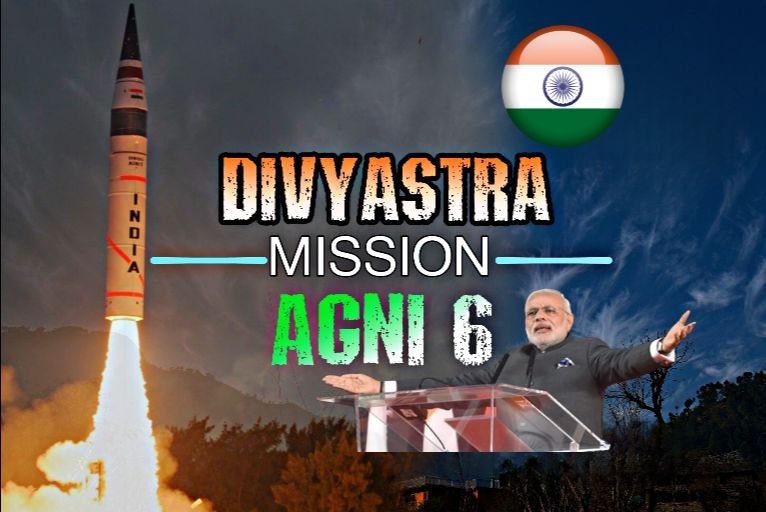
India’s latest strategic missile milestone is being viewed as far more than a successful weapons test. Mission Divyastra, conducted by the Defence Research and Development Organisation (DRDO), has rapidly become a defining moment in the country’s evolving military doctrine and geopolitical positioning.
According to the official announcement by DRDO, the test highlighted India’s growing expertise in MIRV systems, considered one of the most advanced missile technologies globally.
The test immediately attracted attention across Asia and beyond because MIRV systems are not ordinary missile upgrades. They represent a major leap in nuclear deterrence capability, allowing a single missile to deploy multiple warheads aimed at different targets. In strategic terms, that changes how rivals calculate defense, retaliation, and regional military balance. For India, Mission Divyastra is not only about military modernization. It is also a signal that New Delhi intends to expand its strategic influence in an increasingly volatile Indo-Pacific environment.
Understanding What Mission Divyastra Actually Means
Mission Divyastra centered around the testing of Multiple Independently Targetable Reentry Vehicle technology, commonly known as MIRV. This capability allows one ballistic missile to carry several warheads, each capable of striking separate targets with high precision. The technology is exceptionally complex. It requires advanced onboard computing systems, high-accuracy navigation, heat-resistant reentry vehicles, and a sophisticated “post-boost vehicle” that releases warheads during flight. Only a limited number of countries currently possess operational MIRV systems, including the United States, Russia, China, France, and the United Kingdom.
India’s successful demonstration therefore represents entry into a highly exclusive strategic category. Reports linked the technology to the long-range Agni missile family, particularly systems believed capable of ranges exceeding 5,000 kilometers. While official operational figures remain limited, defense analysts estimate that future variants integrated with MIRV systems could potentially extend India’s strategic reach across large parts of Asia, Europe, and beyond depending on payload configuration.
Why MIRV Capability Changes Strategic Calculations
The significance of Mission Divyastra lies in what MIRV technology does to missile defense systems. Traditionally, one ballistic missile carried one warhead. A defense system therefore needed to intercept a single incoming target. With MIRV capability, however, a missile can release multiple warheads alongside decoys. That dramatically complicates interception efforts. In practical terms, this means:
- Greater survivability of nuclear deterrence
- Increased ability to penetrate missile shields
- Higher strategic pressure on adversaries
- Reduced requirement for launching large numbers of missiles
For India, which follows a “credible minimum deterrence” doctrine, MIRV technology strengthens second-strike capability without necessarily expanding the size of its nuclear arsenal dramatically. Strategically, it provides New Delhi with a more resilient deterrent posture against both regional and long-range threats.
China and Pakistan Are Closely Watching
The geopolitical reaction to Mission Divyastra was immediate, particularly from China and Pakistan. China already possesses advanced MIRV-equipped missile systems such as portions of the DF missile series. Beijing is therefore unlikely to be surprised technologically. However, India’s progress narrows capability gaps and signals that New Delhi is accelerating long-term strategic modernization. This development matters because India-China tensions have remained elevated since the Himalayan border clashes in 2020. Both countries are also competing for influence across the Indo-Pacific region, where military capability increasingly shapes diplomatic leverage.
Pakistan’s perspective is more immediate. Islamabad has traditionally relied on tactical nuclear systems and rapid missile development to counter India’s conventional military advantages. Mission Divyastra could push Pakistan to expand missile modernization efforts or deepen strategic cooperation with China. Security analysts warn that the region may now enter a more advanced phase of missile competition involving:
- MIRV deployment
- Missile defense expansion
- Hypersonic weapons research
- Counter-space capabilities
That does not automatically mean conflict is imminent, but it does increase the complexity of deterrence stability in South Asia.
India’s Global Strategic Position Is Evolving
Mission Divyastra also carries diplomatic implications beyond the region. For years, India has sought recognition not merely as a regional military force but as a global strategic actor. Advanced missile capability strengthens that image significantly. Several broader trends support this shift:
- India’s defense spending crossed approximately $83 billion in recent years
- Indigenous defense manufacturing has expanded rapidly
- Strategic partnerships with the United States, Japan, and France continue to deepen
- India’s role in Indo-Pacific security frameworks is increasing
Mission Divyastra fits directly into that broader transformation. From Washington to Tokyo, many strategic partners view a stronger India as a balancing force against expanding Chinese influence. That does not necessarily mean endorsement of arms competition, but it does explain why India’s missile advancements are being interpreted through a larger geopolitical lens. The test also reinforces confidence in India’s domestic defense ecosystem. DRDO’s progress reflects years of investment in indigenous aerospace engineering, missile guidance systems, and advanced materials technology.
Could Mission Divyastra Trigger a Regional Arms Race?
One of the biggest concerns surrounding the test is whether it accelerates strategic competition across Asia. Historically, advanced missile technologies often trigger countermeasures. China could further strengthen missile defense systems or increase deployment flexibility. Pakistan may pursue more mobile launch platforms and expanded nuclear readiness. At the same time, India argues that its doctrine remains defensive and deterrence-oriented rather than expansionist.
Still, strategic perception matters as much as military capability itself. When one nation introduces a major advancement, rivals often respond not because war is expected, but because uncertainty increases. That dynamic has shaped nearly every modern arms competition from the Cold War to present-day Indo-Pacific tensions. Mission Divyastra therefore represents both technological success and geopolitical signaling.
The Bigger Message Behind Mission Divyastra
Beyond the technical achievement, Mission Divyastra reflects a larger transformation in how India sees its place in the world. The country is no longer focusing only on territorial defense. It is increasingly preparing for long-term strategic competition in a rapidly changing global order. The combination of advanced missile capability, expanding naval power, domestic defense production, and Indo-Pacific partnerships suggests India is building the foundations of a broader strategic identity. Mission Divyastra may ultimately be remembered not simply as a missile test, but as a declaration that India intends to operate at a different level of geopolitical influence in the decades ahead.
By Sahil Koul | Geopolitical Analyst