
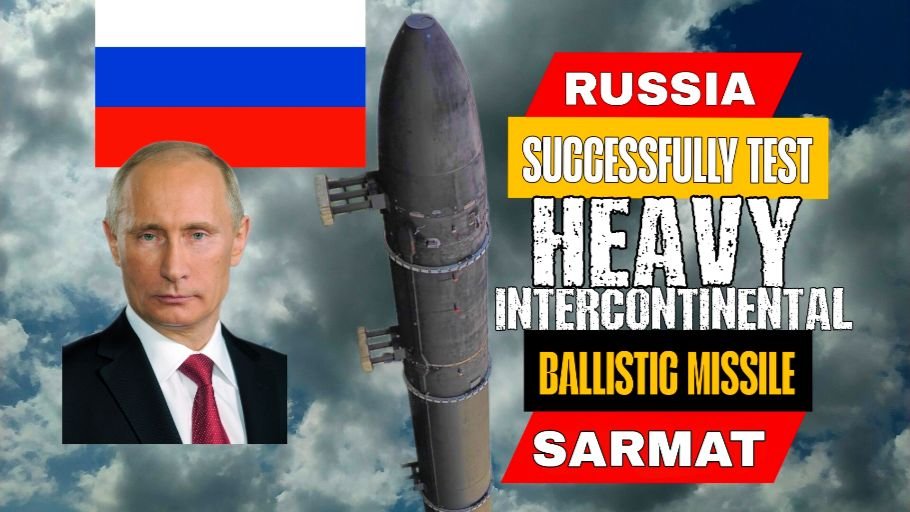
A Nuclear Message Beyond the Battlefield
The latest Russian missile test was not merely another military exercise; instead, the Russia Sarmat missile signaled Moscow’s strategic geopolitical intentions. Moreover, the Russia Sarmat missile launch intensified global anxiety amid the Ukraine war, rising NATO deployments, and escalating nuclear tensions. Meanwhile, NATO continues expanding military coordination near Russian borders, while Moscow increasingly highlights the Russia Sarmat missile as a deterrence tool. Consequently, the Russia Sarmat missile test appeared designed to remind Western governments that Russia still maintains significant strategic nuclear capabilities despite sanctions.
Russia’s Strategic Missile Program Returns to Center Stage
The Russia Sarmat missile represents Moscow’s advanced intercontinental nuclear system and reportedly carries multiple warheads across continents. Furthermore, the Russia Sarmat missile remains central to Russia’s long-term deterrence strategy against NATO, missile defenses, and United States pressure.
For more information on Russia’s latest ballistic missile developments and strategic defense posture, readers can refer to the report published by NPR.
The missile’s significance extends beyond raw military capability. It represents Russia’s effort to maintain nuclear parity with the United States while countering NATO’s expanding missile defense infrastructure in Europe and other regions.
Why the Timing of the Sarmat Test Matters
The geopolitical context surrounding the missile test reflects worsening tensions between Russia, NATO, and Western governments over Ukraine and security issues. Moreover, Russia conducted the launch during heightened confrontation with NATO, while simultaneously pursuing military, political, and strategic objectives internationally.
First, the launch reinforces domestic messaging that Russia remains militarily powerful despite sanctions, isolation, and prolonged battlefield pressures internationally. Meanwhile, the missile test warns NATO governments that direct escalation against Russia could trigger severe geopolitical consequences across multiple regions.
Meanwhile, Western intelligence agencies increasingly view nuclear signaling as an essential component of Russia’s broader strategic deterrence and communication framework. Consequently, the Sarmat missile launch carried psychological significance because it reminded rival governments about potentially devastating geopolitical scenarios globally.
The Role of US Missile Defense in Russia’s Strategy
One major factor behind the Russia Sarmat missile development involves expanding American missile defense systems deployed across Europe during recent years. Furthermore, Moscow argues these defense installations threaten Cold War nuclear deterrence balance by potentially weakening Russia’s retaliatory strike capabilities internationally. Meanwhile, Russian officials specifically criticize NATO-linked missile defense systems stationed throughout Poland, Romania, and several strategically important European regions.
Additionally, these growing security concerns have significantly influenced Russian military planning, strategic doctrine, and long-term nuclear modernization efforts in Moscow. Consequently, the Russia Sarmat missile was engineered to overcome interception systems through maneuverability, alternative flight paths, and multiple nuclear warheads deployment. Moreover, Russian military doctrine increasingly emphasizes preserving second-strike capability, ensuring retaliation remains possible even after suffering devastating nuclear attacks.
Could the Sarmat Test Trigger a New Arms Race?
The broader concern among geopolitical analysts is that the missile test may accelerate a renewed global arms competition. The world’s major powers are already modernizing nuclear arsenals. The United States is upgrading parts of its nuclear triad, China is rapidly expanding missile silos and strategic capabilities, and Russia continues developing advanced delivery systems. The Sarmat test may intensify this trend. NATO countries are likely to interpret the launch as further evidence that Europe has entered a prolonged era of military confrontation with Russia. In response, Western governments may expand defense spending, accelerate missile shield development, and increase strategic deployments across Eastern Europe.
This cycle of action and reaction mirrors dynamics seen during the Cold War, when competing military buildups fueled decades of geopolitical instability. However, today’s environment may be even more unpredictable. Unlike the bipolar world of the 20th century, the modern geopolitical landscape includes multiple nuclear powers, cyber warfare, AI-driven military systems, and unstable regional conflicts. This complexity increases the risk of miscalculation.
Ukraine War and Nuclear Signaling
The Ukraine war remains central to understanding Russia’s nuclear posture. Since the conflict began, Moscow has repeatedly used strategic messaging to deter deeper Western involvement. Russian officials have warned against direct NATO intervention while emphasizing the country’s nuclear readiness. The Sarmat missile test fits into this broader strategy of deterrence through intimidation.
By showcasing one of its most powerful nuclear systems, Russia seeks to reinforce the idea that escalation carries enormous risks. Some analysts believe these signals are primarily defensive, intended to discourage NATO expansion or intervention. Others argue they reflect a more aggressive doctrine aimed at reshaping the global balance of power. Either way, the psychological impact is substantial. Governments across Europe are now reassessing defense planning, civil preparedness, and military coordination at levels not seen in decades.
Global Consequences Beyond Europe
The implications of the Russia Sarmat missile test extend far beyond the NATO-Russia confrontation. Countries in Asia, the Middle East, and the Indo-Pacific are closely monitoring how major powers respond. China, India, North Korea, and other nuclear-capable states may adjust strategic calculations based on the evolving security environment. The missile test could also weaken already fragile arms control frameworks. Several Cold War-era treaties have either collapsed or lost effectiveness in recent years. Trust between Washington and Moscow has deteriorated sharply, making future negotiations increasingly difficult.
If nuclear diplomacy continues eroding, the world could face a prolonged period without meaningful arms limitation agreements. That scenario would likely increase defense spending worldwide while reducing strategic transparency between rival powers. Financial markets, energy security, and global trade routes could also feel indirect effects if geopolitical tensions continue rising.
Conclusion
The Russia Sarmat missile test represents far more than a technical military milestone. It is a geopolitical signal shaped by the Ukraine war, NATO expansion, missile defense disputes, and the broader collapse of trust between Russia and the West. Whether the launch marks the beginning of a new Cold War remains uncertain. Yet the underlying trends are difficult to ignore: rising military spending, aggressive nuclear signaling, weakening arms control agreements, and deepening geopolitical polarization.
The danger is not only the existence of powerful weapons, but also the growing absence of stable diplomatic mechanisms capable of preventing escalation. As global powers continue redefining security strategies, the Sarmat missile may ultimately become a symbol of a world entering a far more dangerous and fragmented era into irreversible escalation. The stakes are no longer regional, they are global.
By Sahil Koul | Geopolitical Analyst