
Introduction
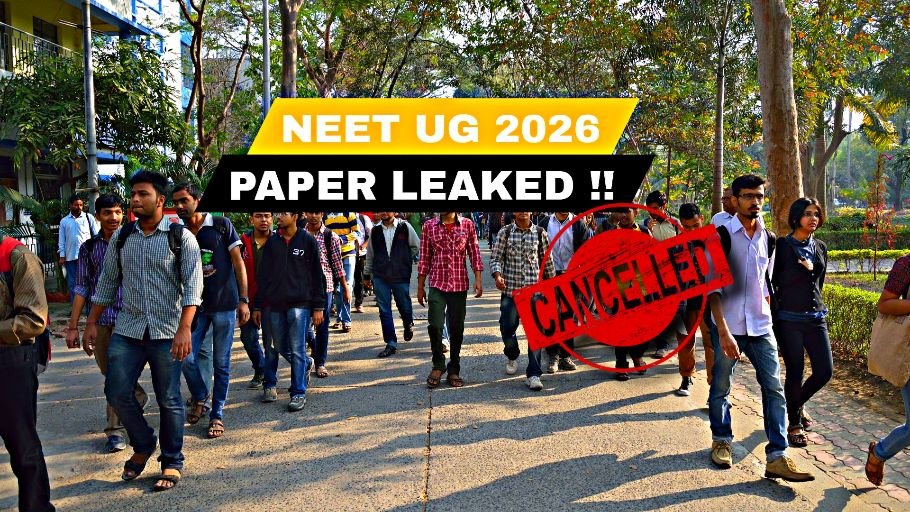
The NEET paper leak controversy has quickly evolved from an education scandal into a national political and institutional crisis. What began as allegations of a leaked question paper soon triggered arrests, nationwide protests, and intense scrutiny of India’s examination system.
The scandal challenged the principle of meritocracy for millions of students competing for limited medical seats. As outrage spread across social media, student groups organized demonstrations in multiple states and pressured the Indian government to act quickly. The controversy has now grown beyond an exam dispute and is testing public trust in India’s education governance and administrative accountability.
How the NEET Paper Leak Controversy Began
The National Eligibility cum Entrance Test (NEET-UG) is one of India’s most competitive entrance examinations, attracting more than 20 lakh aspirants each year. The exam determines admission into MBBS, BDS, and other medical programs across the country. Soon after the 2026 examination concluded, reports emerged that portions of the question paper had allegedly circulated on encrypted messaging platforms before the exam began. Several students and whistleblowers claimed that “guess papers” sold for large sums closely matched the actual exam questions.
According to the government report on the NEET Exam Leak, the authorities initiated a CBI probe following allegations that organized networks were involved in widespread paper leak activities and examination irregularities across several states.
The allegations rapidly escalated into a nationwide controversy, particularly after students accused authorities of failing to prevent repeated exam-related security breaches in recent years.
Public Reaction and Student Anger
The reaction from students and parents was immediate and emotional. For many aspirants, preparing for NEET involves years of intense study, expensive coaching fees, and enormous psychological pressure. The idea that some candidates may have gained unfair access to exam material triggered widespread outrage. Student organizations staged protests in Delhi, Patna, Jaipur, and several other cities. Social media campaigns demanding transparency and accountability began trending within hours of the controversy gaining national attention.
Many students argued that even the perception of unfairness damages the credibility of competitive examinations. Others feared that honest candidates would suffer if the exam were canceled or delayed. Parents also expressed concern about the growing commercialization of entrance examinations, where organized networks allegedly exploit desperate families seeking guaranteed success. The scandal revived criticism of India’s coaching industry and raised broader questions about how high-stakes examinations are managed.
Government Response to the NEET Paper Leak
Immediate Investigation Measures
Facing mounting pressure, the Indian government moved quickly to contain the fallout. The Ministry of Education coordinated with law enforcement agencies and transferred the investigation to the Central Bureau of Investigation (CBI). Authorities launched raids across several states, targeting suspected paper leak operators, coaching centers, and individuals allegedly connected to solver gangs. Multiple arrests followed as investigators examined digital communication records, financial transactions, and printing networks.
Officials also began investigating how confidential exam material may have been accessed before the examination date. Early findings suggested the possibility of organized criminal involvement rather than isolated misconduct. The government emphasized that strict action would be taken against anyone found guilty of compromising exam integrity.
Cancellation Debate and Policy Pressure
One of the most controversial aspects of the crisis involved whether the examination should be canceled entirely. Students remained divided on the issue. Some demanded a complete re-examination, arguing that fairness had already been compromised. Others feared that repeating the exam would place additional mental and financial burdens on candidates who had prepared honestly. Government officials faced a difficult balancing act: restoring credibility without creating even greater uncertainty for students.
As pressure increased, policymakers also faced criticism over the National Testing Agency’s ability to conduct secure large-scale examinations. Opposition parties accused the government of administrative negligence, while education experts called for structural reforms rather than temporary damage control.
Crackdown on Organized Exam Mafias
The NEET paper leak investigation has once again exposed the existence of organized examination rackets operating across India. Authorities believe some networks specialize in:
- obtaining confidential papers,
- arranging impersonators,
- manipulating exam centers,
- and selling access to privileged information.
The government’s response therefore expanded beyond NEET itself. Officials signaled that future crackdowns may target broader exam corruption systems affecting recruitment tests, university admissions, and government examinations. This tougher approach reflects growing recognition that examination fraud is no longer a local problem. It has evolved into a coordinated criminal economy fueled by high competition, economic desperation, and weak institutional oversight.
Geopolitical and Institutional Implications
Although the NEET paper leak is primarily a domestic education issue, its implications extend far beyond India’s classrooms. India has increasingly positioned itself as a global education and technology hub. The credibility of its higher education system plays a major role in attracting foreign partnerships, international students, and medical collaborations. Repeated examination scandals risk damaging India’s institutional image at a time when the country is seeking greater global influence in science, healthcare, and innovation.
The controversy also reflects a wider geopolitical challenge faced by many developing countries: how to maintain integrity in large-scale competitive systems under immense demographic pressure. As India’s youth population continues to grow, competition for elite educational opportunities is becoming more intense. Without stronger institutional safeguards, exam-related corruption could further erode public confidence in governance structures.
Possible Global Consequences
The NEET paper leak may also influence how other countries evaluate partnerships involving Indian educational institutions and testing systems. Several potential consequences could emerge:
- stronger scrutiny of examination security standards,
- increased demand for digital monitoring systems,
- expansion of AI-based anti-cheating technologies,
- and international pressure for transparency in academic admissions.
The scandal may additionally accelerate India’s transition toward computer-based testing and encrypted paper distribution systems. Globally, governments are increasingly confronting sophisticated cyber-enabled cheating operations. The NEET controversy demonstrates how digital communication platforms can rapidly amplify examination fraud networks across regions.
Could This Lead to Long-Term Reform?
Education analysts believe the scandal could become a turning point if authorities pursue genuine structural reforms. Possible reforms include:
- encrypted digital question paper delivery,
- stricter oversight of printing facilities,
- biometric verification systems,
- AI-assisted monitoring,
- and harsher penalties for organized cheating networks.
However, experts warn that technology alone will not solve the problem. Restoring trust requires transparency, institutional accountability, and swift prosecution of offenders. The government’s long-term credibility may depend not only on arrests, but on whether future examinations can be conducted without controversy.
Conclusion
The NEET paper leak controversy has exposed deep vulnerabilities within India’s examination ecosystem. Initially, the incident appeared to be an isolated breach; however, it soon revealed broader concerns involving organized criminal networks, institutional trust, and the intense pressures surrounding competitive education. In response, the government launched investigations, conducted raids, and promised reforms, thereby highlighting the seriousness of the crisis. Nevertheless, public confidence remains fragile. For millions of students, the issue is not merely about one examination; rather, it concerns fairness, opportunity, and faith in a system designed to reward merit. Ultimately, whether this scandal becomes another forgotten controversy or a turning point for meaningful reform will depend on the actions taken in the coming months.
By Sahil Koul | Geopolitical Analyst