
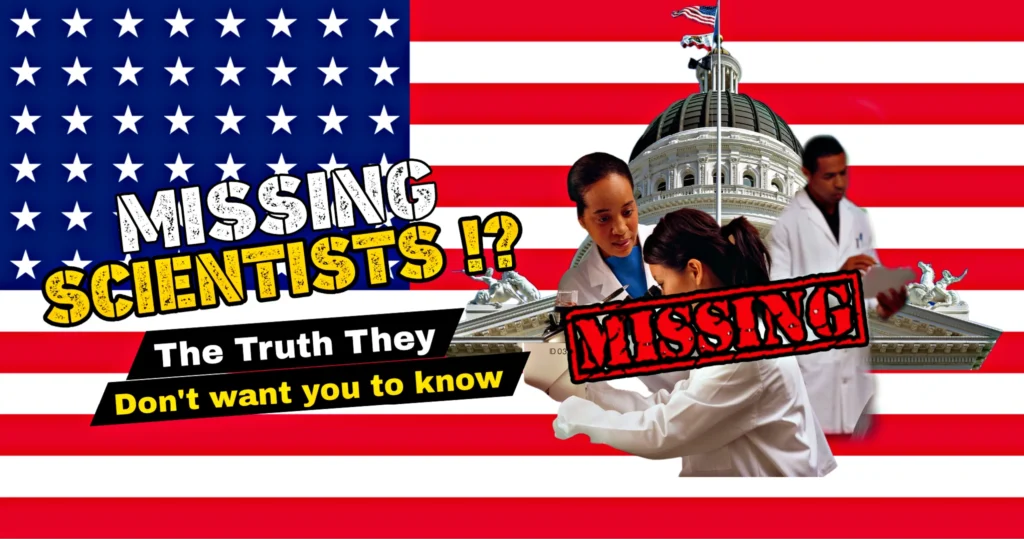
The Growing Fear Behind the Missing Scientists Conspiracy
For decades, the Missing scientists conspiracy has remained one of America’s most controversial underground narratives. Every few years, new claims emerge online. Consequently, they reignite debates about secret government programs, classified military research, and unexplained deaths connected to scientific communities. Although many allegations lack verified evidence, public curiosity continues to grow. Moreover, distrust toward institutions has pushed these theories into mainstream political discussions. As a result, what once belonged to fringe internet forums has evolved into a broader national obsession.
The Origins of the Missing Scientists Conspiracy
The roots of the conspiracy can be traced back to the Cold War era. During that period, scientists played a central role in nuclear development, intelligence operations, and military technology. Therefore, governments often classified sensitive research projects. Many conspiracy supporters point to a series of mysterious deaths involving British and American defense researchers during the 1980s. While official investigations ruled most cases as suicides, accidents, or unrelated crimes, speculation never disappeared.
Additionally, secretive projects conducted by agencies like the CIA further intensified suspicion. Historical revelations involving programs such as MKUltra damaged public trust. Consequently, many Americans began questioning what authorities might still be hiding.
According to a recent Washington Post report, public speculation surrounding missing or dead U.S. scientists has intensified amid growing debates over national security, classified research, and conspiracy theories.
Why the Missing Scientists Conspiracy Continues to Spread
Several factors explain why these theories remain influential today.
Public Distrust Toward Government Institutions
Over the years, Americans have witnessed political scandals, classified military operations, and surveillance controversies. Because of this, many citizens believe governments routinely conceal sensitive information. Furthermore, the rise of digital media has accelerated conspiracy culture. Videos, podcasts, and anonymous online posts often present speculation as hidden truth. Consequently, theories spread faster than verified facts.
Secrecy Around Advanced Technology
Many conspiracy discussions involve advanced research fields. These include artificial intelligence, aerospace engineering, biotechnology, and experimental energy systems. Supporters claim some scientists disappear after developing sensitive technologies. Although there is no verified evidence supporting organized suppression, secrecy surrounding defense contracts fuels suspicion. Moreover, military facilities such as Area 51 continue attracting public fascination. Since officials rarely disclose details about classified programs, rumors naturally expand.
The Influence of UFO and Disclosure Debates
The recent surge in UFO disclosure discussions has revived older conspiracy narratives. Several online communities now connect missing scientist claims with alleged extraterrestrial research programs. Although no evidence proves these connections, public interest has intensified dramatically. As a result, conspiracy culture increasingly overlaps with national security debates.
Current Developments Fueling the Debate
In recent years, social media platforms have transformed how conspiracy theories spread. Unlike previous decades, modern discussions reach millions instantly. Short-form videos frequently present unexplained scientist deaths without broader context. Consequently, isolated incidents appear connected through emotional storytelling. Meanwhile, some independent commentators accuse intelligence agencies of suppressing breakthroughs involving clean energy or military technology. However, credible investigations have not confirmed these allegations.
Nevertheless, growing geopolitical competition between the United States, China, and Russia has added another layer to the debate. Scientific research now plays a direct role in global power struggles. Therefore, secrecy surrounding advanced technology feels more believable to many people.
The Geopolitical Dimensions of the Missing Scientists Conspiracy
The Missing scientists conspiracy is not simply an internet phenomenon. Increasingly, it reflects wider fears about global competition and state secrecy.
Scientific Talent as a National Security Asset
Modern governments consider scientific expertise strategically important. Artificial intelligence, quantum computing, and biotechnology now influence military and economic dominance. Consequently, nations aggressively compete for scientific talent. This reality creates an environment where secrecy appears logical to the public. Additionally, espionage cases involving scientists are real. During the Cold War, both the United States and Soviet Union recruited researchers for intelligence purposes. Therefore, conspiracy theories often blend factual history with speculation.
Information Warfare and Digital Manipulation
Foreign actors also exploit conspiracy theories to deepen public division. Analysts increasingly warn that misinformation campaigns target politically polarized societies. As a result, conspiracy narratives can weaken institutional trust. In geopolitical terms, that creates strategic advantages for rival nations. Furthermore, algorithm-driven social platforms amplify sensational content. Consequently, emotionally charged stories often outperform factual reporting online.
The Role of National Security Secrecy
Governments routinely classify military research for security reasons. However, secrecy can unintentionally strengthen conspiracy narratives. When officials refuse to discuss sensitive programs, public suspicion naturally increases. Therefore, even ordinary events sometimes become linked to larger hidden narratives. This dynamic has become especially visible in discussions surrounding aerospace technology and defense innovation.
Why the Public Reaction Remains Intense
Public fascination with missing scientist theories reflects deeper cultural anxieties. Many citizens worry about declining transparency within powerful institutions. Others fear technological change beyond public understanding. Additionally, distrust toward corporations and political elites continues growing worldwide. Because of this environment, conspiracy theories offer simplified explanations for complex events.
At the same time, entertainment media reinforces these narratives. Popular films and television series frequently portray secret laboratories, hidden experiments, and covert agencies. Consequently, fictional storytelling shapes public perception. Importantly, some people do not fully believe these theories. However, they still question whether governments reveal the complete truth. That gray area keeps public debate alive.
Could These Conspiracies Affect Global Politics?
While many theories remain speculative, their broader consequences are real.
Erosion of Public Trust
Conspiracy narratives can weaken confidence in scientific institutions. Consequently, public skepticism may increase during national crises. This became visible during global health emergencies, where distrust complicated official communication efforts.
Rising Polarization
Online conspiracy communities often become politically polarized. Therefore, governments increasingly view misinformation as a national security challenge. Several countries now invest heavily in digital monitoring and counter-disinformation strategies.
Impact on Scientific Communities
Scientists working in controversial fields sometimes face online harassment and suspicion. As a result, public discourse around research becomes more hostile. This environment may discourage open collaboration in sensitive technological sectors.
Why the Missing Scientists Conspiracy Refuses to Disappear
The Missing scientists conspiracy survives because it sits between reality and speculation. Governments genuinely protect classified information. Intelligence agencies historically conducted secret programs. Espionage involving scientists also occurred throughout history. However, large-scale claims about coordinated disappearances remain unsupported by credible evidence.
Still, uncertainty creates space for endless interpretation. As geopolitical tensions rise globally, secrecy surrounding advanced technology will likely increase. Consequently, conspiracy theories connected to scientists may continue evolving for years. Ultimately, the debate reveals more about public anxiety than hidden evidence. Americans increasingly fear losing visibility into systems that shape national power. Therefore, the obsession reflects a deeper crisis of institutional trust in the modern era.
By Sahil Koul | Geopolitical Analyst