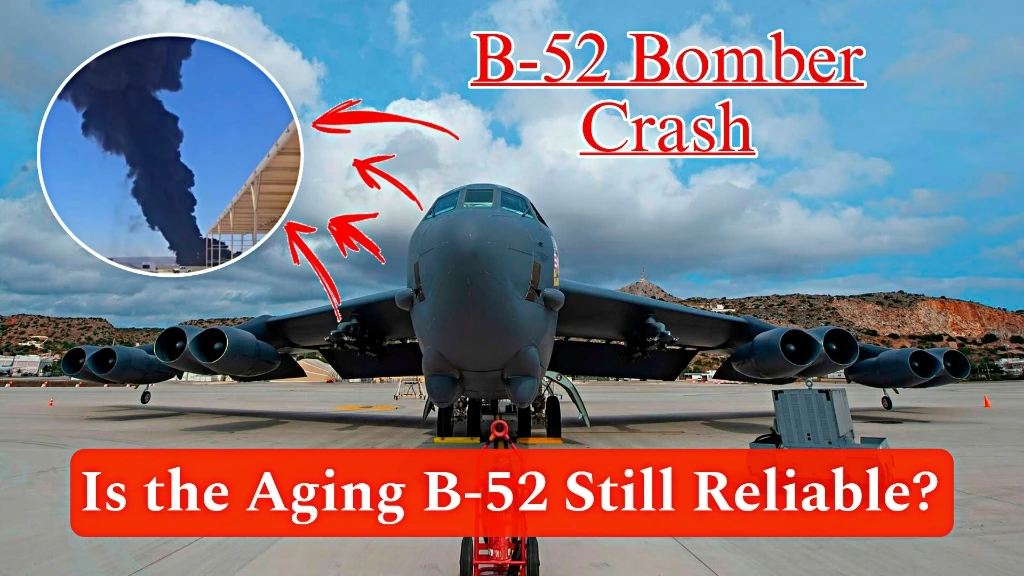
The USAF B-52 Crash has once again drawn attention to one of America’s oldest yet most important military aircraft. Although the B-52 Stratofortress has served for more than seven decades, questions are growing over whether the bomber can remain dependable well into the future.
Moreover, the incident has revived debates surrounding aircraft safety, modernization priorities, and the long-term sustainability of the United States Air Force’s strategic bomber fleet. Consequently, defense analysts are examining whether age alone could eventually become a critical operational challenge.
Understanding the Significance of the USAF B-52 Crash
The Boeing B-52 Stratofortress entered service in 1955 and quickly became one of the most recognizable aircraft in American military history. Since then, the bomber has participated in conflicts ranging from the Vietnam War to operations in the Middle East. Unlike many Cold War systems that have already retired, the B-52 continues to play a central role in America’s conventional and nuclear deterrence strategy. Therefore, every accident involving the aircraft attracts significant attention.
According to the U.S. Air Force, upgraded B-52 bombers are expected to remain in service into the 2050s and potentially even beyond. However, the aircraft’s extraordinary lifespan has also intensified scrutiny over long-term maintenance requirements, structural fatigue, and the rising costs associated with sustaining such an aging fleet. As a result, the USAF B-52 Crash has renewed debate among defence analysts about whether modernization efforts can continue to offset the challenges posed by decades of continuous service.
Current Developments Surrounding the USAF B-52 Crash
As reported by The American Legion, a B-52H Stratofortress bomber crashed moments after departing Edwards Air Force Base in Southern California, resulting in the deaths of all eight people on board. Military investigators typically examine several factors after bomber accidents. These include mechanical failures, maintenance procedures, weather conditions, and human factors. Although many investigations require months to reach final conclusions, early assessments often focus on whether aging components contributed to the incident. In addition, authorities evaluate whether existing inspection protocols remain sufficient for aircraft that have already exceeded their original design expectations.
Meanwhile, the United States Air Force continues to invest heavily in modernization programs. New engines, radar upgrades, communication systems, and electronic warfare capabilities are being integrated into the bomber fleet. As a result, officials argue that modernization can extend operational effectiveness without sacrificing safety. Nevertheless, critics contend that no amount of upgrades can completely eliminate the challenges associated with aging airframes.
Why the B-52 Remains Vital to America’s Military Strategy
Despite its age, the B-52 remains one of the most versatile platforms in the U.S. arsenal, capable of carrying both conventional and nuclear weapons while supporting long-range missions across multiple theatres of operation.
Nuclear Deterrence
The aircraft forms a critical component of America’s nuclear triad. Consequently, its operational readiness directly influences U.S. strategic deterrence capabilities and broader calculations concerning global security and military stability.
Long-Range Conventional Strike
The bomber can carry large quantities of conventional weapons over vast distances. Therefore, it provides military planners with considerable flexibility during regional conflicts, power projection missions, and rapid response operations across multiple theatres worldwide.
Global Presence Operations
The B-52 regularly participates in missions across Europe, the Indo-Pacific, and the Middle East. As a result, it serves as a visible symbol of American power and alliance commitments, while also reassuring partners and demonstrating Washington’s ability to project force on a global scale.
Because of these capabilities, replacing the aircraft entirely would require enormous financial investments and years of transition planning. Moreover, integrating newer platforms would involve extensive training, infrastructure upgrades, and adjustments to existing strategic doctrine.
What the USAF B-52 Crash Means for Global Security
The USAF B-52 Crash carries implications that extend far beyond aviation safety concerns. Indeed, strategic competitors and international observers closely monitor such incidents to assess the readiness, reliability, and long-term sustainability of American military capabilities.
Signals to Rivals
Countries such as China and Russia closely monitor American military readiness and operational performance. Consequently, accidents involving high-profile assets can shape international perceptions regarding U.S. force reliability, strategic resilience, and the effectiveness of its long-term defence posture.
Pressure on Modernization Programs
The incident could intensify debates over the pace and priorities of bomber modernization efforts. Furthermore, lawmakers and defence officials may face growing pressure to accelerate next-generation programs and allocate additional resources to maintaining long-term strategic capabilities.
Impact on Allied Confidence
American allies rely heavily on U.S. strategic capabilities and extended deterrence commitments. Therefore, maintaining confidence in long-range deterrence remains essential for alliance stability, regional security, and the credibility of Washington’s defence guarantees.
However, most defence experts believe that isolated incidents rarely diminish overall military effectiveness or significantly alter strategic capabilities. Instead, such accidents often prompt comprehensive safety reviews, operational assessments, and technical improvements aimed at strengthening long-term readiness
What Global Consequences Could Follow the USAF B-52 Crash?
Several broader consequences could emerge if similar incidents become more frequent. In particular, repeated accidents could raise concerns about fleet sustainability, operational readiness, and the long-term viability of aging strategic assets.
First, maintenance budgets may continue to increase as aging aircraft demand more frequent inspections, structural assessments, and costly repairs to maintain operational readiness and safety standards. Second, policymakers could reassess the balance between sustaining legacy systems and investing in next-generation platforms to ensure long-term military effectiveness and technological superiority. Third, rival nations could exploit such incidents through information campaigns aimed at challenging perceptions of American military superiority and strategic reliability among international audiences.
Nevertheless, the United States possesses extensive experience operating aging aircraft fleets. Consequently, the Air Force has developed sophisticated maintenance procedures aimed at preserving operational readiness.
Can the B-52 Continue Flying for Decades?
Many analysts believe the answer is yes, provided modernization programs continue to receive adequate funding and institutional support. Throughout its long history, the B-52 has repeatedly demonstrated remarkable adaptability to evolving operational requirements. Moreover, successive upgrades to its engines, avionics, weapons systems, and communications capabilities have enabled the bomber to remain relevant despite decades of rapid technological change.
However, aging aircraft inevitably face increasing maintenance requirements. Therefore, reliability will depend on continued investment, rigorous inspections, and successful modernization efforts. Ultimately, the future of the bomber may not depend solely on age. Instead, it may depend on whether technological upgrades can consistently outpace the limitations imposed by decades of service.
Conclusion
The USAF B-52 Crash has reignited questions about the future of one of America’s most iconic strategic bombers. The aircraft remains a cornerstone of U.S. military strategy and global deterrence. However, its advanced age continues to fuel debate among defence experts and policymakers. As modernization efforts continue, maintaining operational reliability will remain a major challenge. In addition, sustaining a Cold War-era platform will be a critical issue for the United States Air Force in the years ahead.
For now, ongoing modernization programs appear capable of extending the bomber’s operational lifespan for decades. Nevertheless, each new incident highlights the challenge of balancing reliability, maintenance costs, and strategic requirements. The long-term success of the B-52 fleet will depend on continued upgrades and sustained funding. At the same time, the U.S. Air Force must address the limitations associated with operating an aircraft that first entered service during the Cold War.
By Simran Verma| Geopolitical Analyst