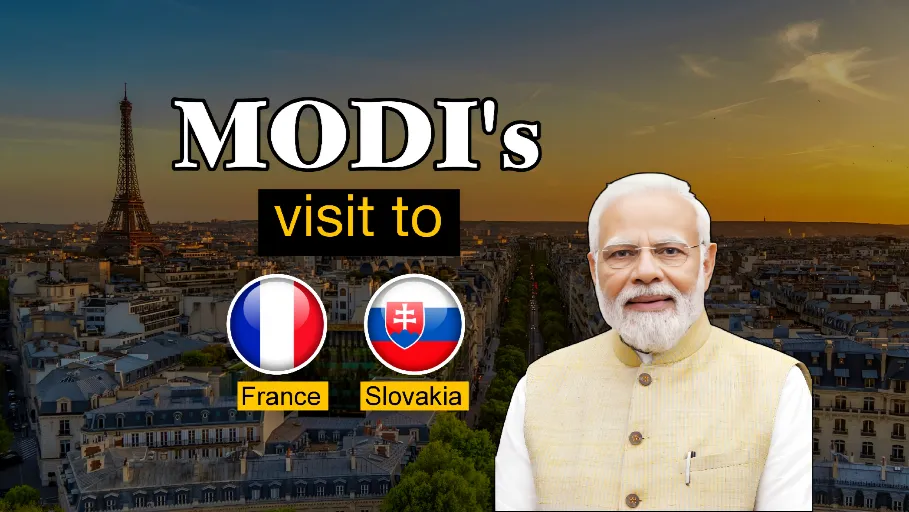
Europe Watches as India Expands Its Strategic Reach
The Modi France Slovakia Visit attracted significant international attention at a time of growing geopolitical uncertainty. Global leaders closely monitored the tour because it highlighted India’s expanding role in Europe and beyond. More importantly, the visit demonstrated New Delhi’s intention to strengthen partnerships while maintaining its strategic autonomy. As power balances continue to shift, major countries increasingly view India as a crucial diplomatic and economic partner. Therefore, Prime Minister Narendra Modi’s engagements in France and Slovakia carried implications far beyond bilateral relations.
Why the Visit Mattered
The Modi France Slovakia Visit came amid rising competition among global powers for influence, technology partnerships, and secure supply chains. Europe has sought stronger engagement with India as economic and security challenges continue to evolve. France has long been one of India’s most trusted strategic partners. Cooperation spans defense, aerospace, nuclear energy, and the Indo-Pacific region. Slovakia, meanwhile, represents an important gateway into Central Europe and offers opportunities in manufacturing, innovation, and industrial cooperation.
According to official information released by the Government of India, the visit focused on strengthening strategic partnerships, expanding economic cooperation, and enhancing collaboration in emerging technologies and global governance.
Official details regarding Prime Minister Modi’s engagements in France and Slovakia, including discussions on strategic partnerships, innovation, trade, and regional cooperation, are available on the Ministry of External Affairs.
Current Developments During the Modi France Slovakia Visit
Strengthening the India-France Strategic Partnership
France remained the centerpiece of the European tour. Discussions focused on defense cooperation, technological innovation, artificial intelligence, clean energy, and maritime security. Both nations emphasized their commitment to maintaining stability in the Indo-Pacific. They also explored opportunities for deeper industrial cooperation and investment. As a result, analysts viewed the meetings as another step toward expanding one of India’s most important international partnerships. Furthermore, both sides discussed strengthening cooperation in advanced technologies. Such collaboration could support long-term economic growth and strategic resilience.
Expanding Ties with Slovakia
The Slovakia segment of the visit received considerable attention from European policymakers. Although Slovakia is smaller than many European powers, it occupies a strategic position within the European Union. During meetings with Slovak leaders, discussions focused on trade, investment, innovation, industrial cooperation, and education exchanges. Both countries explored new opportunities for collaboration in manufacturing and technology sectors. Consequently, the Modi France Slovakia Visit signaled India’s intention to engage not only major European powers but also emerging partners across Central Europe.
How Global Powers Reacted to Modi’s Latest European Tour
European Union Welcomed Stronger Engagement
Many European observers viewed the visit positively. The European Union continues to seek diversified economic partnerships and more resilient supply chains. India’s large market and growing technological capabilities make it an attractive partner. Therefore, several European policymakers welcomed deeper cooperation resulting from the Modi France Slovakia Visit. Moreover, stronger India-Europe ties could help both sides reduce vulnerabilities in critical industries and emerging technologies.
United States Viewed the Visit Through a Strategic Lens
Washington closely followed developments during the tour. The United States has consistently supported stronger partnerships among democratic nations. American analysts generally viewed the visit as complementary to broader efforts aimed at maintaining stability in the Indo-Pacific. Additionally, stronger India-Europe cooperation could reinforce existing strategic frameworks without creating new geopolitical divisions. As a result, many observers interpreted the tour as evidence of India’s growing diplomatic influence across multiple regions.
China Monitored Developments Carefully
China also watched the visit with interest. Beijing has observed India’s expanding partnerships with Western nations and European countries. Although the visit was not directed against any specific country, enhanced cooperation between India and European partners inevitably attracts attention from Chinese policymakers. Defense collaboration, technology cooperation, and supply-chain initiatives remain particularly significant areas of interest. Therefore, analysts expect China to continue monitoring future developments stemming from the Modi France Slovakia Visit.
Russia Maintained a Balanced Perspective
Russia has historically enjoyed close ties with India. Consequently, Moscow carefully evaluates India’s growing engagement with Western countries. However, Russia generally recognizes India’s independent foreign policy approach. New Delhi continues to pursue partnerships across different geopolitical blocs while avoiding exclusive alignments. This balanced strategy allows India to maintain constructive relations with multiple global powers simultaneously.
Geopolitical Implications of the Modi France Slovakia Visit
Reinforcing Strategic Autonomy
One of the most significant outcomes of the Modi France Slovakia Visit was the reaffirmation of India’s strategic autonomy. Rather than aligning exclusively with any bloc, India continues to build partnerships based on national interests. This approach increases diplomatic flexibility while enhancing economic and security cooperation. As global rivalries intensify, such flexibility becomes increasingly valuable.
Strengthening India’s Position in Europe
The visit also highlighted India’s growing importance in European strategic calculations. European nations increasingly view India as a reliable partner in technology, trade, and security matters. Furthermore, cooperation with both Western and Central European countries broadens India’s influence across the continent. Consequently, India’s diplomatic footprint in Europe appears likely to expand further in coming years.
Advancing Technology and Economic Goals
Another important implication involves technology and innovation. Nations increasingly compete for leadership in artificial intelligence, clean energy, semiconductors, and advanced manufacturing. The Modi France Slovakia Visit reinforced India’s efforts to secure partnerships in these critical sectors. Such cooperation could support economic growth while reducing dependence on limited supply chains.
Possible Global Consequences
Several long-term consequences could emerge from the tour. First, India-Europe relations may deepen significantly. Increased investment, trade, and technology cooperation could follow future agreements.Second, the visit may encourage additional European nations to pursue stronger engagement with India. This trend could reshape economic and diplomatic dynamics across the region. Third, global supply-chain diversification efforts may accelerate. Companies increasingly seek reliable partners outside traditional manufacturing hubs.
Finally, India’s role as a bridge between different geopolitical blocs may become even more important. Many countries value New Delhi’s ability to maintain constructive relations with competing powers.
Conclusion
The Modi France Slovakia Visit represented much more than a routine diplomatic tour. It reflected India’s broader strategy of expanding partnerships, strengthening economic cooperation, and enhancing its global influence. Global reactions demonstrated widespread recognition of India’s growing importance in international affairs. European leaders welcomed deeper engagement. The United States viewed the tour positively.
China monitored developments closely, while Russia maintained a pragmatic perspective. Ultimately, the Modi France Slovakia Visit showcased India’s ability to engage multiple partners while preserving strategic autonomy. As geopolitical competition continues to evolve, the outcomes of this visit may influence diplomatic and economic relationships far beyond Europe.
By Sahil Koul| Geopolitical Analyst