Rising Unrest Signals a New Challenge for Islamabad
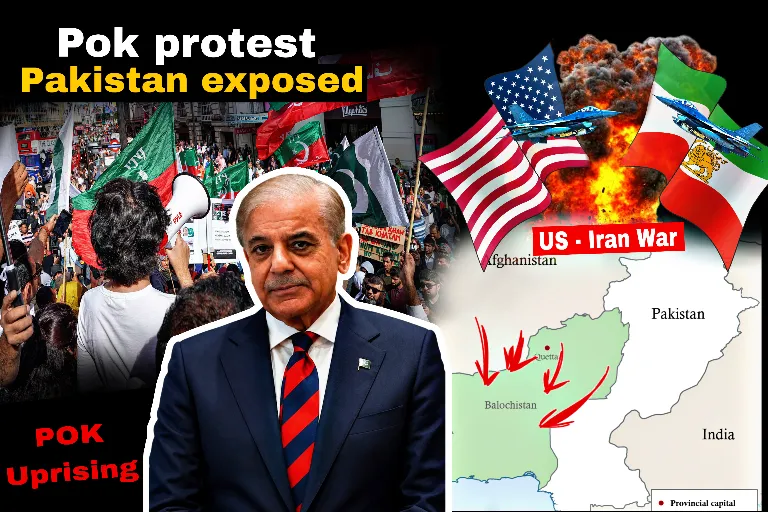
The PoK Protests 2026 have emerged as one of the most significant internal challenges facing Pakistan this year. What began as demonstrations over governance and economic concerns has evolved into a broader political movement that is attracting regional and international attention.
As crowds continue to gather across several towns in Pakistan-occupied Kashmir (PoK), questions are growing about Islamabad’s ability to manage multiple crises simultaneously. At the same time, Pakistan remains deeply engaged in regional diplomacy surrounding tensions involving the United States and Iran. Consequently, analysts are now asking whether the country is facing a deeper internal crisis than officials are willing to acknowledge.
Why Did the PoK Protests Begin?
The roots of the PoK Protests 2026 lie in a combination of economic frustration, political grievances, and long-standing concerns over governance. Residents have voiced anger over rising living costs, electricity pricing, unemployment, and what many perceive as inadequate local representation. Furthermore, protest organizers argue that decision-making remains heavily influenced by authorities in Islamabad rather than local institutions. As a result, demands have expanded beyond economic issues and now include calls for greater political accountability.
For analysis of the political and geopolitical factors behind the unrest, readers can check the report of PRF World’s assessment of the protests in Pakistan-occupied Kashmir.
Although protests have occurred in the region before, the current movement appears broader and more organized. Therefore, many observers believe it reflects deeper dissatisfaction that has accumulated over several years.
Current Developments in the PoK Protests 2026
The PoK Protests 2026 have intensified in recent weeks. Demonstrators have organized rallies, road blockades, and public gatherings across several districts. Security forces have increased their presence in response to the unrest. Meanwhile, reports indicate that authorities have imposed restrictions in certain areas to prevent the demonstrations from spreading further. Government officials maintain that they are acting to preserve public order and protect infrastructure.
However, protest leaders insist that their movement remains focused on social and political demands. They argue that peaceful demonstrations are necessary to draw attention to local concerns. As tensions continue, the situation has become a major domestic issue for Pakistan. Moreover, it has attracted increased scrutiny from international observers monitoring regional stability.
PoK Protests 2026 and Pakistan’s Foreign Policy Dilemma
The timing of the PoK Protests 2026 presents a difficult challenge for Pakistan’s leadership. While authorities attempt to manage unrest at home, Islamabad is also investing diplomatic resources in regional security issues. In recent months, Pakistan has sought to maintain dialogue with multiple regional actors amid tensions involving the United States and Iran. The government views regional stability as essential for economic growth and national security.
Nevertheless, domestic critics argue that international diplomacy cannot overshadow internal concerns. They contend that unresolved grievances in PoK require immediate attention. Consequently, Pakistan faces a balancing act. It must maintain its regional diplomatic role while simultaneously addressing growing dissatisfaction within its own administered territories.
How Balochistan Adds Pressure on Pakistan
The discussion surrounding the PoK Protests 2026 has also revived debate about conditions in Balochistan. Although the two regions face different circumstances, both have become central to conversations about governance and state authority. Balochistan has experienced security challenges and separatist activity for many years. While Pakistani authorities continue to maintain control, recurring incidents have highlighted persistent tensions.
Therefore, some analysts argue that simultaneous pressure in PoK and Balochistan stretches government resources and political attention. They believe Islamabad must address local grievances more effectively to prevent further instability. At the same time, government officials reject suggestions that state authority is weakening. Instead, they emphasize ongoing development projects and security measures designed to strengthen national cohesion.
Geopolitical Implications of PoK Protests 2026
The geopolitical significance of the PoK Protests 2026 extends beyond Pakistan’s domestic politics. Kashmir remains one of South Asia’s most sensitive territorial disputes. Therefore, developments in the region inevitably attract attention from neighboring countries and international stakeholders. Any prolonged instability could influence diplomatic narratives surrounding the broader Kashmir issue. Additionally, regional powers closely monitor political developments that may affect security calculations.
Furthermore, external actors often assess internal stability when evaluating economic partnerships and strategic cooperation. Consequently, sustained unrest could affect perceptions of Pakistan’s political environment. The situation also arrives during a period of heightened geopolitical uncertainty across the Middle East and South Asia. Therefore, policymakers are watching closely for any signs that local unrest could intersect with wider regional tensions.
Possible Global Consequences
If the PoK Protests 2026 continue to expand, several international consequences could emerge. First, investor confidence may be affected if instability persists for an extended period. Economic uncertainty often discourages foreign investment and slows development initiatives. Second, regional security concerns could intensify. Any escalation may require greater diplomatic engagement from neighboring countries and international organizations. Third, Pakistan’s ability to position itself as a regional mediator could face challenges.
Governments engaged in diplomacy often encounter increased scrutiny when domestic unrest dominates headlines. Finally, prolonged instability could influence broader discussions regarding governance, autonomy, and political representation across contested regions worldwide.
What Happens Next?
The future of the PoK Protests 2026 depends largely on how authorities and protest leaders navigate the coming weeks. Dialogue remains the most effective path toward reducing tensions. If meaningful negotiations occur, the government may be able to address some of the concerns driving public demonstrations. However, failure to engage constructively could deepen political divisions. Therefore, the coming months may prove critical not only for PoK but also for Pakistan’s broader political landscape.
Additionally, international observers will closely monitor developments on the ground. Any escalation could increase diplomatic pressure on Islamabad and draw greater global attention to governance issues in the region. Conversely, successful engagement with protest groups could help restore confidence and reduce the risk of prolonged instability across sensitive areas.
Conclusion
The PoK Protests 2026 have evolved into a significant political challenge that extends beyond local grievances. They highlight deeper questions about governance, representation, and public trust. At the same time, Pakistan faces a complex regional environment shaped by Middle Eastern tensions and ongoing security concerns. Consequently, policymakers must balance international diplomacy with domestic stability.
Whether the unrest becomes a temporary political episode or a defining national challenge will depend on the government’s response. For now, the PoK Protests 2026 remain a crucial development with implications that reach far beyond the region itself.
By Sahil Koul| Geopolitical Analyst