
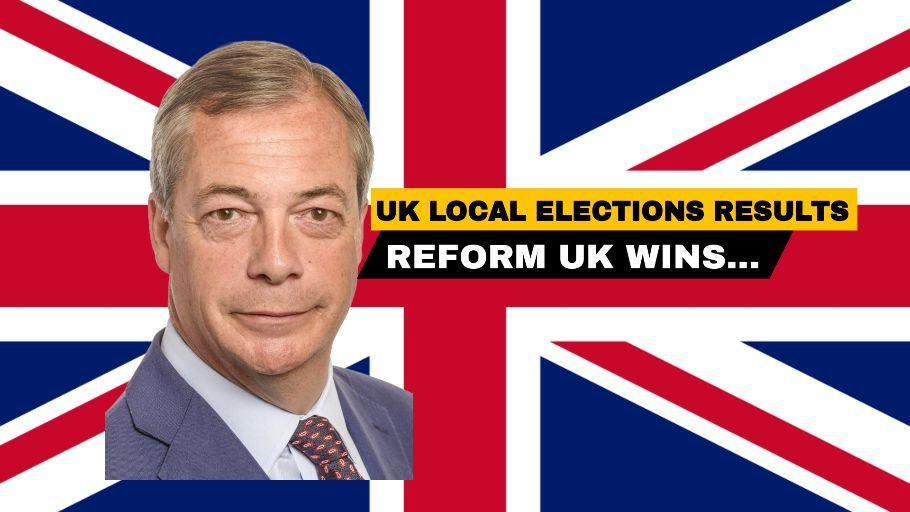
The UK Local Elections Expose a Fractured Political Order
The latest UK local elections may prove to be more than a routine political contest. Across United Kingdom, voters delivered a sharp message to Britain’s traditional political establishment, signaling frustration with both the governing Conservative Party and the opposition Labour Party. The most striking outcome was the dramatic rise of Reform UK, a party that until recently was often dismissed as a protest movement operating on the political margins.
Instead, the elections revealed a fragmented and increasingly volatile political landscape. While the Conservative Party suffered heavy losses, the results also exposed vulnerabilities for Labour Party leader Keir Starmer, whose party failed to secure the commanding breakthrough many analysts had predicted. Britain now appears to be entering a new political phase where smaller parties, regional dynamics, and voter dissatisfaction are reshaping the future of governance.
Why the UK Local Elections Mattered
Local elections in Britain are often viewed as a test of national political mood. Although councils focus on local governance issues such as transport, housing, and public services, voters frequently use these elections to express broader frustration with Westminster politics. This year’s UK local elections carried unusual political weight. Britain continues to face economic pressure from inflation, rising living costs, sluggish growth, and strained public services. Concerns over immigration, taxation, and energy security have also intensified political divisions. Against this backdrop, all major parties entered the elections under pressure.
For verified local election outcomes and official authority records, please visit Barnsley Council election results
The elections became a referendum not only on the Conservatives’ years in power but also on whether Labour had successfully convinced voters it could deliver meaningful change. Instead, the results pointed toward a growing rejection of the traditional two-party structure that has dominated British politics for decades.
Reform UK’s Surge Changes the Political Conversation
The biggest political story emerging from the UK local elections was undoubtedly the rise of Reform UK. The party managed to convert dissatisfaction with mainstream politics into tangible electoral gains, particularly in areas where voters feel economically neglected or culturally disconnected from London-based political elites. Reform UK’s appeal has been built around several themes: tougher immigration policies, criticism of establishment politics, opposition to certain climate regulations, and promises to reduce government bureaucracy. These positions resonated strongly with sections of the electorate frustrated by economic stagnation and political gridlock.
What makes Reform UK’s performance especially significant is that it threatens both major parties simultaneously. Traditionally, protest votes in Britain often weakened only the governing party. This time, Reform UK appears capable of drawing support from disillusioned Conservative voters while also attracting working-class voters who once formed part of Labour’s base. The results suggest that British politics is no longer simply divided between left and right. Instead, the growing divide may increasingly revolve around trust versus establishment politics, globalization versus local priorities, and cultural identity versus institutional consensus.
Labour’s Setback and Growing Pressure on Starmer
Although Labour Party gained seats in several regions, the broader narrative after the elections was far less triumphant than the party had hoped. Expectations for Labour were extremely high, particularly given the scale of Conservative unpopularity after years of political instability, leadership changes, and economic challenges. However, Labour failed to deliver the overwhelming electoral momentum many observers expected. In several key areas, voters either shifted toward smaller parties or remained unconvinced that Labour represented a transformative alternative.
This outcome places growing pressure on Keir Starmer. Starmer has spent years attempting to reposition Labour as a moderate, stable governing force capable of appealing to centrist voters and businesses. While this strategy improved Labour’s credibility among some middle-class voters, critics argue it has weakened the party’s emotional connection with traditional working-class communities.
The elections exposed a strategic dilemma for Labour. Moving too far toward the political center risks alienating grassroots supporters, while shifting leftward could alarm moderate voters concerned about economic management and national security. For Starmer, the challenge is no longer simply defeating the Conservatives. It is now about preventing political fragmentation from weakening Labour’s long-term coalition.
Conservative Decline Deepens
The elections also confirmed the continuing decline of the Conservative Party. Years of internal divisions, economic controversies, and leadership turmoil have significantly damaged voter confidence. Many traditional Conservative voters appear increasingly frustrated by what they see as unfulfilled promises on immigration control, taxation, and economic growth. Some of these voters shifted directly toward Reform UK, accelerating the fragmentation of the right-wing vote.
The Conservative decline could have major implications for future British elections. If Reform UK continues to expand its support base, it may force the Conservatives into a strategic identity crisis. The party could either move further right to regain lost voters or reposition itself toward the center to attract moderates. Both paths carry risks. The growing competition on the political right mirrors developments seen in other Western democracies where populist and nationalist movements have disrupted traditional conservative parties.
The Rise of Smaller Parties and Political Fragmentation
Another important trend from the UK local elections was the continued rise of smaller and regional parties. Across various councils, voters increasingly supported alternatives outside the traditional Labour-Conservative framework. This fragmentation reflects deeper societal changes. Younger voters, regional communities, and issue-driven constituencies are becoming less loyal to major political parties. Environmental concerns, regional autonomy, housing costs, and anti-establishment sentiment are creating space for smaller political movements to gain influence.
Britain’s political system has historically favored large parties due to its electoral structure. However, local elections demonstrate that voter behavior is evolving faster than institutional systems. If fragmentation continues, coalition politics and tactical alliances could become more common in future British governance.
Geopolitical Implications Beyond Britain
The political shifts emerging from the UK local elections extend beyond domestic politics. Britain remains a key member of NATO, a major European security actor, and an important diplomatic partner for both the United States and Europe. Political instability or fragmentation in Britain could affect several geopolitical areas:
Foreign Policy Consistency
A divided political environment may complicate long-term strategic planning on defense, Ukraine support, migration policy, and relations with Europe.
Economic Confidence
International investors closely monitor political stability. Rising political fragmentation can increase uncertainty around taxation, regulation, and future economic policy.
European Relations
Although Britain has left the European Union, its economic and security relationship with Europe remains critical. A stronger populist movement could influence future debates on trade agreements, border policy, and European cooperation.
Populist Momentum Across Europe
The rise of Reform UK also fits into a broader European pattern where anti-establishment and nationalist parties are gaining momentum. Similar trends are visible in parts of France, Germany, Italy, and the Netherlands.
A Defining Moment for British Politics
The UK local elections revealed something deeper than temporary voter dissatisfaction. They exposed a changing political culture where loyalty to major parties is weakening and political identity is becoming more fluid. For Labour, the elections serve as a warning that defeating unpopular opponents is not enough to secure lasting trust. For Conservatives, the results highlight a dangerous erosion of their traditional voter base. And for Reform UK, the elections represent a breakthrough moment that could reshape Britain’s political conversation ahead of future national contests.
Britain is entering a period where political unpredictability may become the new normal. The long-standing assumptions that defined British politics for decades are now being challenged from multiple directions at once.
By Sahil Koul | Geopolitical Analyst